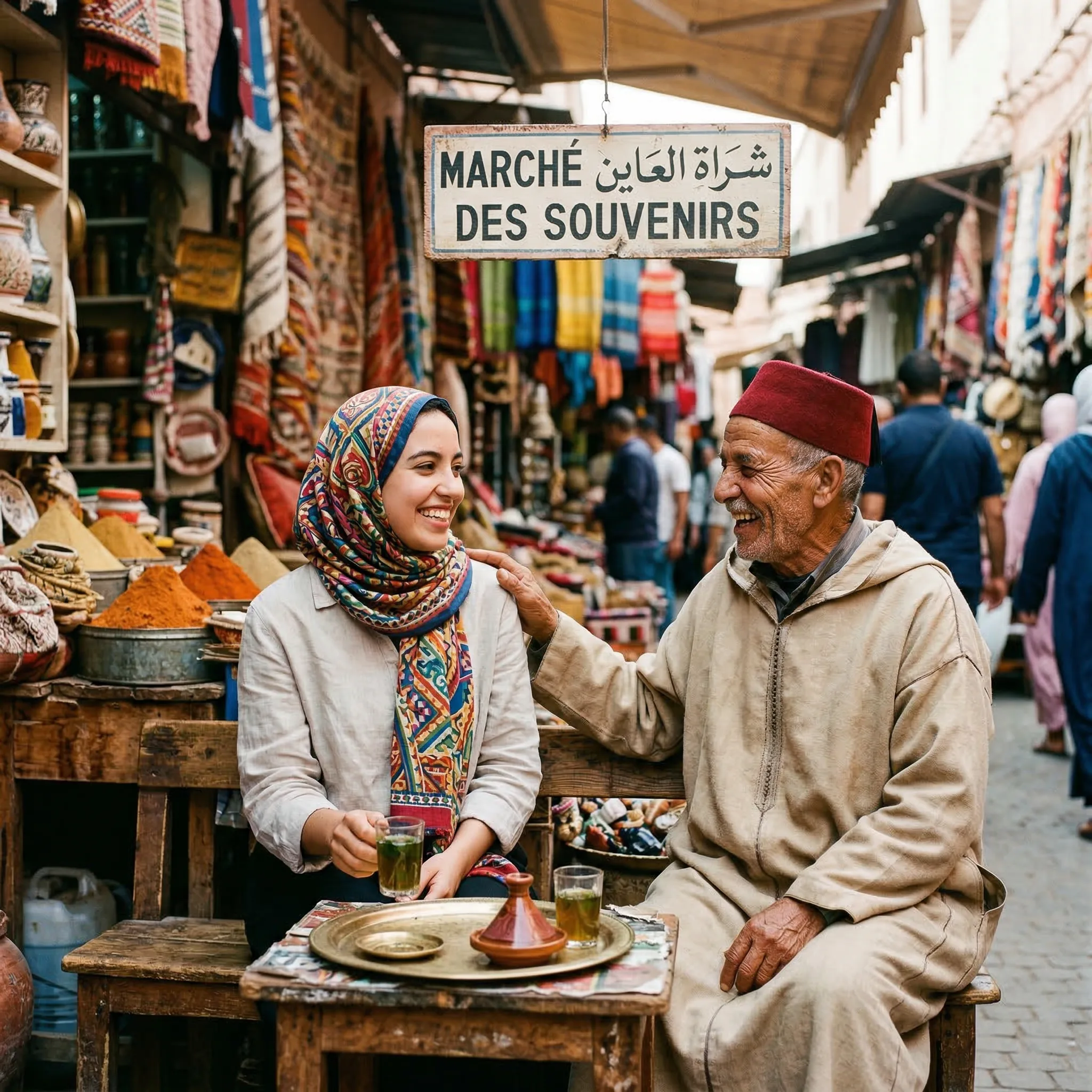
Ramadan transforms the rhythm of Morocco in ways that can be unexpectedly wonderful — late-night medinas, spectacular breaking-fast meals, a sense of community. For day-trippers, it mostly changes the lunch stop and the pace of the afternoon; excursions, pickups and the sights themselves run as normal.
In this guide
When Ramadan falls
Ramadan moves roughly eleven days earlier each year in the Gregorian calendar. Through the late 2020s it falls approximately as follows: 2027 in late January to late February; 2028 in mid-January to mid-February; 2029 in January. Because dates are set by moon sighting, always verify in the year you travel. The holy month lasts 29 or 30 days.
- 2027: approximately 28 January – 26 February
- 2028: approximately 17 January – 15 February
- 2029: approximately 6–25 January
What changes for excursions during Ramadan
The big practical shift for a day-tripper is lunch. Village and roadside eateries on excursion routes — Ourika, the kasbah road, the Atlas — often close during daylight, so plan a tourist-facing restaurant, ask your driver where is open, or pack food for the day. Café culture vanishes during daylight too, so don't count on a mid-route coffee. Energy and traffic slow sharply in the hour before iftar, so aim to be back at your base, not stuck on a mountain road, as sunset approaches.
After sunset, the country transforms. Jemaa el-Fnaa and equivalent squares fill with families, performers and food stalls — a wonderful thing to come back to after a day out. The breaking-fast meal — harira soup, chebakia pastries, dates, msemen — is one of Morocco's great experiences, and many riads offer guests a seat at the iftar table.
What still runs during Ramadan
The sights and the logistics are largely unaffected: kasbahs, waterfalls, the souks, museums, riads, drivers and excursion operators all run normally, and Agafay and desert camps continue. Pickups happen on schedule; only the traffic crush right before iftar is worth avoiding on the road. Hotels and riads serve food throughout the day even when village stops do not.
As a visitor, eat, drink and smoke discreetly when you stop during daylight out of respect for those fasting — it's appreciated even if not legally required. Dress slightly more conservatively than usual, especially in the villages your excursion passes through, and expect a warmer, more festive evening atmosphere than at any other time of year.
Is Ramadan a good time for day trips?
For many travellers, Ramadan is a highlight — thinner crowds at the sights, dipped riad prices, and the nightly iftar to return to. The trade-off for day-trippers is the daytime food puzzle and the need to time excursions so you're not caught on the road at sunset. It suits the culturally curious over those wanting a packed, food-on-the-go sightseeing sprint. Build a little flex into each day and it's a rewarding time to explore.
Frequently asked
Can I eat and drink on an excursion during Ramadan?
Legally, non-Muslims are not required to fast, but eating, drinking and smoking visibly in public during daylight is considered disrespectful. On a day trip, eat discreetly — inside a tourist-facing restaurant your driver recommends, or in the vehicle rather than at a village table — and your riad will serve meals normally before and after.
Where do I eat lunch on a day trip during Ramadan?
Tourist-facing restaurants in the towns and at major sights generally stay open, but village and roadside stops often close until iftar. Ask your driver where is open along the route, or pack lunch for the day. After sunset, food is abundant and the atmosphere festive.
Do excursions and sights still run during Ramadan?
Yes — kasbahs, waterfalls, souks, museums, drivers and excursion operators all operate normally, and Agafay and desert camps continue. The one practical difference is the late-afternoon slowdown and the traffic rush before iftar, so time your return to your base for before sunset.
When is Ramadan in Morocco in the coming years?
Ramadan moves roughly eleven days earlier each Gregorian year. In 2027 it falls approximately late January to late February; in 2028, mid-January to mid-February. Confirm exact dates close to your travel date, as they depend on the moon sighting.
Is Ramadan a bad time for day trips in Morocco?
Not at all — it's simply different. The daytime pace is slower and the village lunch options shrink, but the sights are quieter, the evening atmosphere is electric, and iftar back at your base is a highlight. Just plan the lunch stop and time your return for before sunset.
Planning a trip?
Let a Marrakech atelier handle the details.
Tell us your dates and style and we'll send a written itinerary and a transparent quote within 24 hours.
Request an itineraryKeep reading
Planning
The Best Time to Visit Morocco
Spring (March–May) and autumn (September–November) are the best all-round times to take day trips and short excursions in Morocco — warm but walkable days, cool evenings and the long daylight that lets you squeeze a full Agafay, Ourika or Ait Ben Haddou day out of a single city base.
Culture
Morocco Etiquette & Customs
A little cultural awareness goes a long way on a Morocco excursion — where you pass through Berber villages, argan co-ops and small shrines that see fewer tourists than the city. Dress modestly, greet warmly, ask before photographing people, use your right hand, and embrace the unhurried pace of mint tea.
Culture
Moroccan Food & Drink
Half the pleasure of a Morocco day trip is the lunch in the middle of it — a slow-cooked tagine in a Berber village, fresh-grilled sardines on the Essaouira quay, or roadside msemen and mint tea on the kasbah run. Here is what to order on the road and how to eat well between sights.