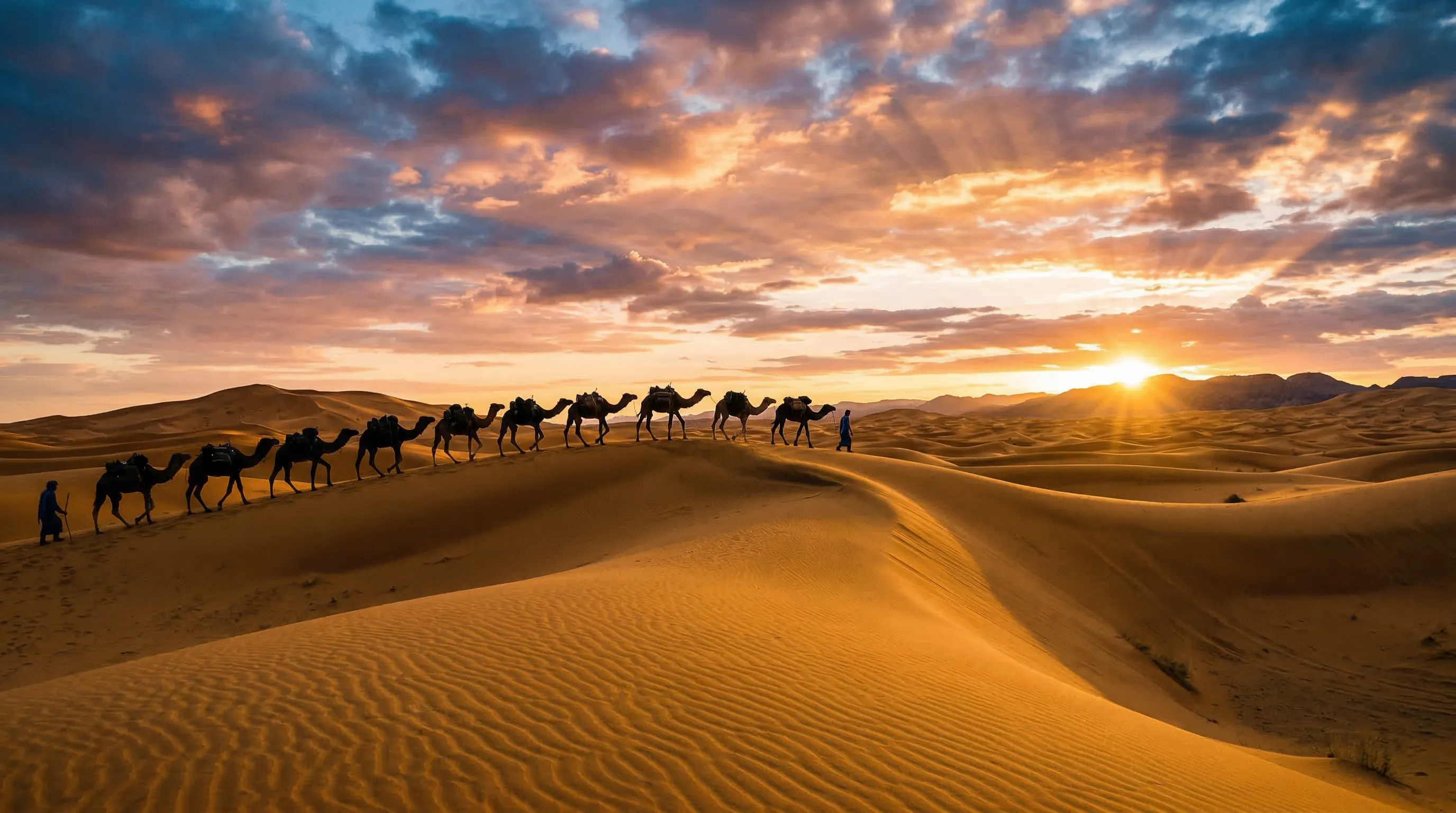
Pack light, modest and layered — then build a small day-pack you can grab each morning. A single Morocco excursion can run from a hot city pickup to a cold Atlas viewpoint or a windy Atlantic rampart, so breathable layers, comfortable walking shoes and a warm top cover almost everything.
In this guide
The day-pack essentials
These earn their place in your excursion day-pack, in any season — the bag you carry out the riad door each morning rather than your full suitcase.
- Comfortable, broken-in walking shoes — uneven medina lanes, gorge paths and waterfall trails all punish stiff new soles.
- Breathable layers and one genuinely warm layer (an Atlas or desert-edge afternoon drops fast even when the city is hot).
- Modest cover-up — shoulders and knees covered for the Berber villages and shrines you pass on Ourika or Imlil days.
- Sun hat, sunglasses and SPF 30+; a scarf doubles as sun, dust and modesty cover on an open road.
- A reusable water bottle, snacks for the longer runs, and a Type C/E plug adaptor (220V) for the riad at night.
By excursion type
For an Agafay or Sahara-edge day, add a warm layer for sunset, a buff or scarf against blown sand, and slip-on shoes. For an Ourika or Ouzoud waterfall day, pack swimwear and sandals with grip — the rocks are wet. For an Imlil or Atlas day hike, bring proper trail shoes and a windproof layer; high viewpoints stay cold into late spring. For an Essaouira coast day, expect wind year-round and pack a light windproof top.
What to leave at the riad
On a day out you don't need your whole bag. Leave fine jewellery, spare cash and your passport locked at the riad (carry a copy plus the address in Arabic), and keep your excursion day-pack light — you'll be in and out of a vehicle and on your feet for hours. Souks sell argan oil, soaps and scarves cheaply, so leave a little room for what you buy along the way.
Frequently asked
What should women wear on a Morocco excursion?
Loose, breathable clothing that covers shoulders and knees is respectful and comfortable, and it matters more on a day trip through Berber villages than in a relaxed city riad. You don't need to cover your hair except inside certain religious sites. A scarf is the most versatile item you can pack.
Do I need warm clothes for a desert or Atlas day trip?
Yes — pack a warm layer even for a day excursion. The Agafay and Sahara-edge evenings cool quickly, and an Atlas viewpoint can be cold while your city base is warm. A fleece and a hat make a sunset stop far more enjoyable.
What power adaptor does Morocco use?
Morocco uses the European two-pin Type C/E plugs at 220V. Bring a European adaptor; most phone and laptop chargers handle the voltage automatically.
Planning a trip?
Let a Marrakech atelier handle the details.
Tell us your dates and style and we'll send a written itinerary and a transparent quote within 24 hours.
Request an itineraryKeep reading
Planning
The Best Time to Visit Morocco
Spring (March–May) and autumn (September–November) are the best all-round times to take day trips and short excursions in Morocco — warm but walkable days, cool evenings and the long daylight that lets you squeeze a full Agafay, Ourika or Ait Ben Haddou day out of a single city base.
Culture
Morocco Etiquette & Customs
A little cultural awareness goes a long way on a Morocco excursion — where you pass through Berber villages, argan co-ops and small shrines that see fewer tourists than the city. Dress modestly, greet warmly, ask before photographing people, use your right hand, and embrace the unhurried pace of mint tea.
Planning
Is Morocco Safe to Visit?
Yes — Morocco is one of the safest and most welcoming countries in North Africa for visitors, and day trips and excursions are about as low-risk as travel gets here. The main day-to-day issues are petty scams and medina hustle, both easily sidestepped when you travel with a pre-arranged pickup.