01Medina
Wander the Blue Medina Lanes
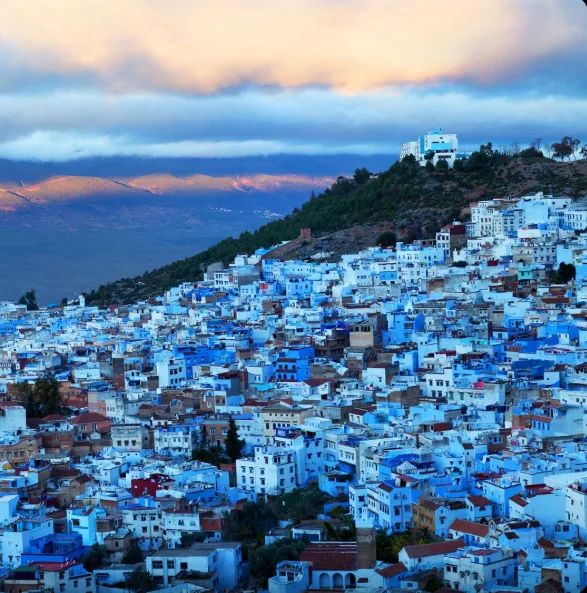
The heart of Chefchaouen is its old town, where nearly every wall, door and staircase is painted in shades of blue. Get lost in the narrow alleys, photograph the indigo doorways and browse small artisan shops.
Things to do · Chefchaouen
Tucked into Morocco's Rif Mountains, Chefchaouen is the famous blue-washed town where lime-painted lanes, mountain waterfalls and Andalusian culture meet. Here are the best things to do in the Blue City.
12 experiences
The heart of Chefchaouen is its old town, where nearly every wall, door and staircase is painted in shades of blue. Get lost in the narrow alleys, photograph the indigo doorways and browse small artisan shops.
The main square at the centre of the medina is lined with cafés and restaurants and overlooked by the Kasbah and the Grand Mosque with its distinctive octagonal minaret. It is the town's natural meeting point, day and night.
Built in the 18th century, the restored red-walled Kasbah houses a small ethnographic museum, shaded gardens and a tower you can climb for views over the square and surrounding rooftops.
A short uphill walk east of town leads to the abandoned Spanish Mosque on a hillside. It is the classic sunset spot, with panoramic views of the entire blue medina set against the green Rif Mountains.
On the eastern edge of the medina, this small cascade marks the spring that supplies the town's water. Locals still wash clothes here, and riverside cafés make it a relaxing place to pause.
About a 45-minute drive from town, the Akchour waterfalls are a popular day hike through a river gorge, ending at a series of falls and natural pools that are refreshing for a swim in warmer months.
A huge natural rock arch carved by the river within the Akchour area, God's Bridge is reached on a separate, easier trail and is one of the most impressive natural sights near Chefchaouen.
This protected Rif mountain park surrounds Chefchaouen and shelters rare Moroccan fir forests, deep gorges and varied wildlife. It is the gateway for the region's longer treks, including the routes to Akchour.
Chefchaouen has a long textile tradition. Watch artisans weave blankets and scarves on wooden looms, and browse the wool and craft souks for locally made woven goods and natural-dyed pieces.
The Rif region is known for its fresh goat cheese, often served with local honey and bread. Sample tagines, bissara (fava bean soup) and mint tea at family-run restaurants around the medina.
Settle into one of the terrace cafés ringing the main square for mint tea or coffee and watch daily life unfold. It is the best spot for slow people-watching with a view of the Kasbah.
One of the historic gates marking the entrance to the old town, Bab el-Souk leads from the newer streets into the blue medina and the bustling market area, a good orientation point for first-time visitors.
There is no single confirmed reason. Popular explanations include the blue introduced by Jewish refugees who settled here in the 1930s, the idea that the colour symbolises the sky and heaven, and practical theories that it keeps homes cool and repels mosquitoes. Today the blue is maintained largely because it draws visitors and has become the town's identity.
Yes. Chefchaouen is one of Morocco's most photogenic towns and offers a relaxed mountain atmosphere quite different from Marrakech or Fez. With its blue medina, hilltop viewpoints, nearby waterfalls and walkable centre, most travellers find one to two nights well worth the trip.
One full day is enough to explore the medina, climb to the Spanish Mosque and visit the Kasbah. Add a second day if you want to hike to the Akchour waterfalls or God's Bridge, or simply enjoy the slower pace of the Blue City.
See it with a local
We'll build a private, guided plan around the experiences you care about — with a driver, hand-picked riads and a written quote in 24 hours.
Contact us for pricingMore cities