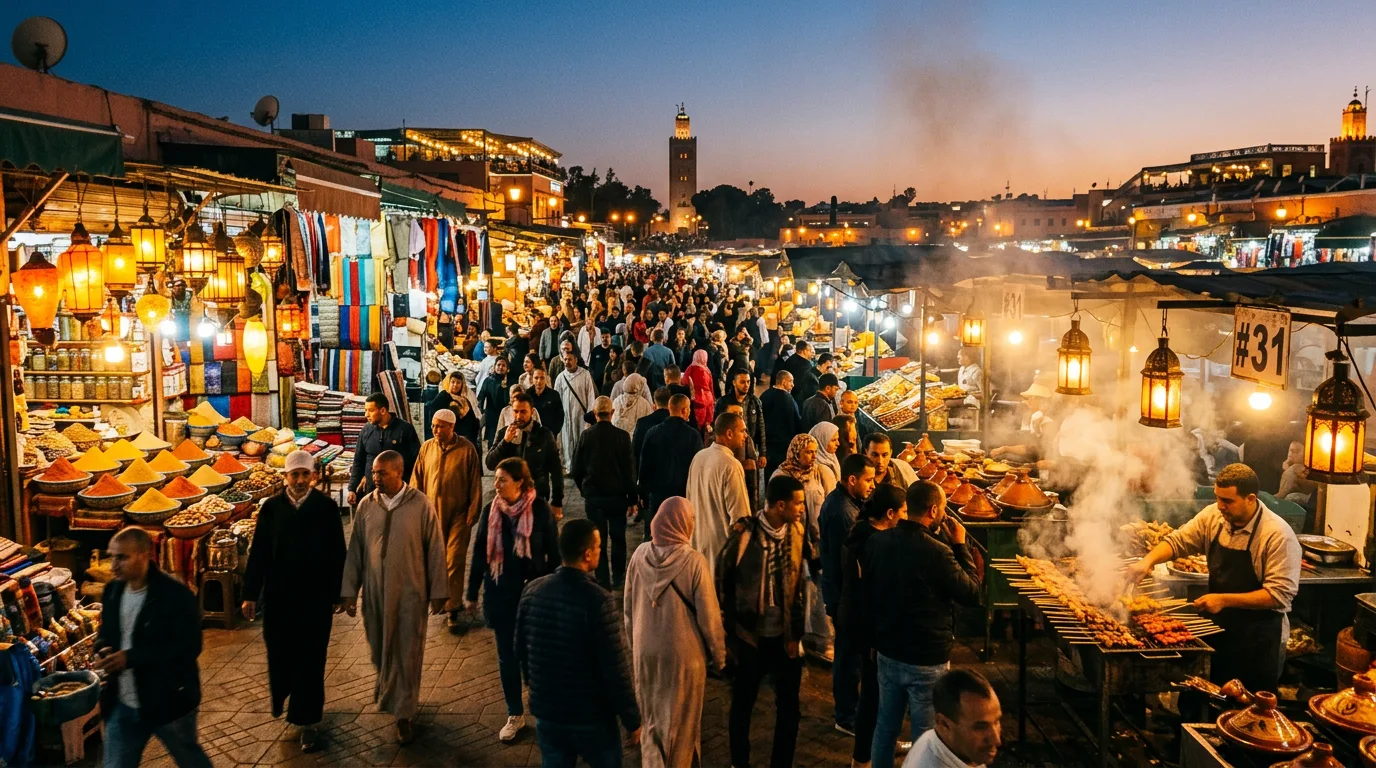
Winter (December–February) is a fine season for day trips out of Marrakech and Fes — Agafay, the Ourika Valley and the Atlantic coast all run well — but short daylight and snow on the Tizi n'Tichka change what fits in a day. This guide covers which excursions work, which to skip, and how to plan around the early dusk.
In this guide
Which day trips work best in winter?
Most short excursions from Marrakech and Fes run all winter, and the cool, clear conditions are often better than the summer heat for being out on the ground. The Agafay desert — barely 40 minutes from Marrakech — is at its most comfortable: bright stone-desert days of 15–18°C, no heat haze over the Atlas, and a camp dinner that genuinely warrants the fire. The Ourika Valley, an hour away in the High Atlas foothills, runs as usual; the river-valley walk to the Setti Fatma waterfalls is crisp rather than punishing, though after heavy rain or snow the upper cascades can be cold and slippery.
The one thing winter takes away is daylight. Sunset in Marrakech falls around 18:00 in December, and a chilly dusk arrives fast, so a winter day trip needs an earlier pickup (08:00–08:30) and a tighter turnaround than the same excursion in June. Plan to be heading back by mid-afternoon, and treat the long kasbah-road runs — Aït Ben Haddou and Ouarzazate — with extra caution, because that route depends on a pass that winter can close.
- Agafay desert (from Marrakech): ideal in winter — 15–18°C days, clear Atlas views, warming camp dinners.
- Ourika Valley (from Marrakech): runs all winter; crisp waterfall walk, but upper cascades cold after rain/snow.
- Atlantic coast (Essaouira day): mild 14–18°C, windy; a sturdy short-daylight option that avoids any pass.
- Short daylight: December sunset around 18:00 — pickups at 08:00–08:30, back by mid-afternoon.
- Aït Ben Haddou run: possible but pass-dependent — see the Tizi n'Tichka section before booking.
Why is winter good for getting out of the cities?
December through February is low season, and that shows on a day trip in good ways: lighter crowds at the Ourika roadside cafés and the Setti Fatma trail, easier Agafay camp availability, and quieter mornings at Essaouira's ramparts and fish harbour. The cool air also makes the active excursions — valley walks, Agafay quad or camel rides, an Atlas foothill hike from Imlil — far more pleasant than the same outings under a July sun.
The trade-off is purely about the high mountains and the long southern runs. Snow above roughly 1,500–2,000 m means an Imlil or Atlas day hike can need proper footwear and may turn back early, and the passes that feed the desert routes can shut. None of that affects the bread-and-butter winter day trips — Agafay, Ourika, the coast — which is exactly why they are the season's safe choices.
What should you pack for a winter day trip?
Winter day trips need more layers than summer packing lists suggest, even when the city feels mild. Marrakech afternoons are pleasant in a light jacket, but the Agafay desert and the Ourika Valley both turn cold the moment the sun drops behind the Atlas, and an Agafay camp evening is genuinely chilly. Carry a warm mid-layer on every excursion regardless of how the morning starts — you will want it for the drive back as much as for the destination.
- Warm mid-layer (fleece or packable down): essential for Agafay evenings and any Atlas-foothill day.
- Waterproof walking shoes: useful for the Ourika waterfall path and any Imlil hike after rain or snow.
- Windproof shell: the Essaouira coast day is breezy and cool even in sun.
- Sun protection: winter sun off snow and white kasbah walls is still strong — bring SPF.
- A small daypack: you will shed and re-add layers across a single excursion as altitude changes.
Are the winter festivals worth timing a day trip around?
Winter is quiet on the festival calendar, but a couple of dates can shape an excursion. Yennayer — the Amazigh (Berber) New Year on 13 January — is increasingly celebrated in the Berber villages of the High Atlas, which can add real colour to an Ourika Valley or Imlil day if your dates line up. The Marrakech International Film Festival in late November or early December fills the city itself rather than the day trips, but it is worth knowing about for pickup traffic and riad availability.
If your trip overlaps a winter Ramadan window in certain years (dates shift annually — check the calendar), daytime excursions still run, but plan lunch around the fasting day: pack your own, or choose a coast or Agafay outing where your operator handles catering rather than relying on a quiet valley café.
Is the Tizi n'Tichka pass a problem for winter day trips?
Only for the long southern excursion, but there it is the decisive factor. The Tizi n'Tichka (2,260 m) carries the Aït Ben Haddou and Ouarzazate day trip from Marrakech, and after heavy snowfall — most likely in January and early February — it can close for 6–24 hours until the gendarmerie clears it. On an already-long there-and-back day, a closure mid-route can strand you, so this is the one winter excursion to approach with caution: ask your driver to check pass conditions the evening before, and keep a flexible alternative ready.
If you want a southern or desert flavour in winter without the pass risk, lean on the shorter trips that never cross it: Agafay's stone desert from Marrakech, or an Ourika Valley day into the Atlas foothills. These deliver the mountain-and-desert feel of a winter excursion while staying well clear of the snow-line roads that can derail the Ouarzazate run.
Frequently asked
Which day trips work in Morocco in winter?
Agafay desert and the Ourika Valley from Marrakech, and the Essaouira coast day, all run reliably through winter and benefit from the cool, clear conditions. The Aït Ben Haddou and Ouarzazate run also operates but depends on the Tizi n'Tichka pass, which snow can close — so it is the one excursion to plan with a flexible backup.
How does short winter daylight affect a day trip?
December sunset in Marrakech is around 18:00 and dusk turns cold fast, so winter excursions need earlier pickups (08:00–08:30) and a return by mid-afternoon. The close-in trips — Agafay, Ourika — absorb this easily; the long kasbah-road runs leave much less daylight margin, which is another reason to favour the shorter ones.
Is the Agafay desert cold in winter?
Daytime in Agafay is comfortable at 15–18°C, but it drops quickly after sunset and an evening camp dinner is genuinely chilly. Bring a warm mid-layer and wear it from dusk. The cool, clear winter air actually makes Agafay one of the season's best and most reliable day or overnight trips from Marrakech.
Can you still do the Aït Ben Haddou day trip in winter?
Yes, when the Tizi n'Tichka pass is open — but heavy snow in January and early February can close it for hours, which can wreck a same-day return. Ask your driver to check conditions the night before, build in flexibility, and consider a shorter pass-free trip like Agafay or Ourika if the forecast looks marginal.
What should you pack for a winter day trip from Marrakech?
A warm mid-layer for cold evenings in Agafay and the Atlas foothills, waterproof shoes for the Ourika waterfall path, a windproof shell for the Essaouira coast, and sun protection — winter sun off snow and white walls is still strong. Layering matters because a single excursion can swing from mild city to cold valley and back.
Planning a trip?
Let a Marrakech atelier handle the details.
Tell us your dates and style and we'll send a written itinerary and a transparent quote within 24 hours.
Request an itineraryKeep reading
Planning
The Best Time to Visit Morocco
Spring (March–May) and autumn (September–November) are the best all-round times to take day trips and short excursions in Morocco — warm but walkable days, cool evenings and the long daylight that lets you squeeze a full Agafay, Ourika or Ait Ben Haddou day out of a single city base.
Planning
Sahara from Marrakech: Why It's an Overnight, Not a Day Trip
Travellers searching for a Sahara day trip from Marrakech soon hit a hard truth: the real dunes are too far to see and return in one day. Here is why Merzouga, Chigaga and Zagora are overnight excursions — and why Agafay is the genuine desert day trip near the city.
Practical
What to Pack for Morocco
Pack light, modest and layered — then build a small day-pack you can grab each morning. A single Morocco excursion can run from a hot city pickup to a cold Atlas viewpoint or a windy Atlantic rampart, so breathable layers, comfortable walking shoes and a warm top cover almost everything.