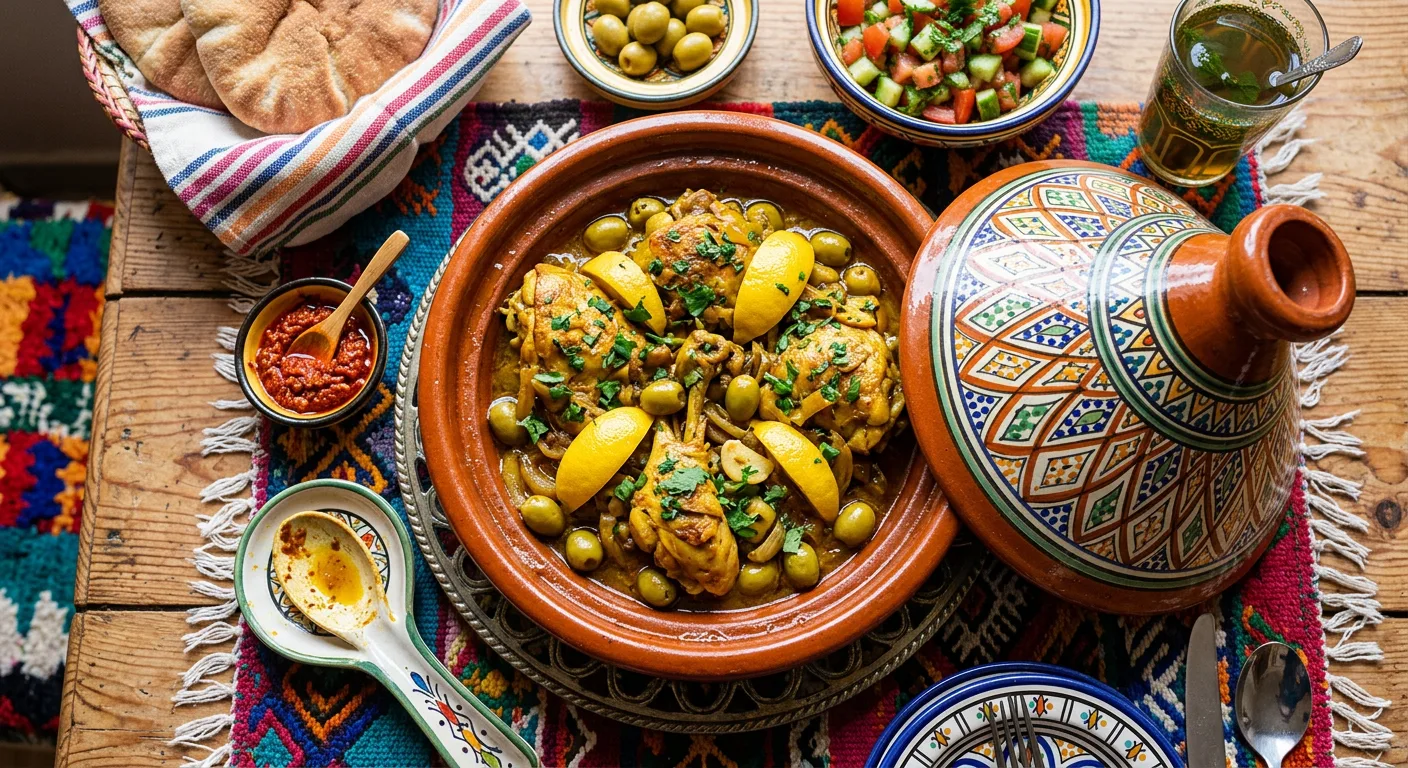
Marrakchi cuisine is not what most visitors expect. The tagine and couscous you know from restaurants abroad are real — but they share the table with dishes that rarely leave the country: slow-braised lamb perfumed with aged butter and honey, flaky pastry of pigeon and almond, and a bread culture so woven into daily life that bakeries stay open past midnight. If you are using Marrakech as a base for day trips, your meals here are precious — a handful of evenings and lunches between drives — so this guide is built to spend them on the food that actually matters, not the nearest tourist menu.
The dishes worth seeking out
Pastilla (b'stilla) is the dish most often described as a revelation. A large round pie of wafer-thin warka pastry, filled with braised pigeon (or chicken) shredded with egg, cinnamon and almonds, dusted with icing sugar — the sweet-savoury combination is deeply Andalusian in character. It is celebratory food, rarely made at home, and the test of a serious Moroccan kitchen.
Mrouzia is a braised lamb shoulder with smen (a pungent aged butter), honey, almonds and a complex spice blend. It is traditionally eaten at Eid al-Adha but appears on good restaurant menus year-round. The sweetness is more restrained than it sounds; the smen gives it a depth that no other Moroccan dish quite matches.
Mechoui — whole or half lamb slow-roasted in a clay oven until it falls from the bone — is sold in dedicated mechoui cellars in the medina, usually in the afternoon before the evening cut. You buy by weight, eat with your hands and cumin salt, and drink cold water. It is one of the most satisfying meals in Morocco, and a perfect late lunch the day you keep things in the city rather than driving out. Our day-trip planners know exactly where to go.
Street food on Jemaa el-Fna
The square's food stalls materialise at dusk and run until after midnight. The setup is theatrical: numbered stalls, vendors calling out, smoke from charcoal grills, displays of raw kefta, merguez and brochettes. The food — when ordered directly and at an agreed price — is genuinely good. Grilled kefta (minced lamb with parsley and cumin) with flatbread and harissa is the benchmark order.
Avoid the set tourist menus pushed at arriving visitors; the per-item prices are consistently fair if you specify what you want. Snail soup (served from large cauldrons) and makouda (potato fritters) are the local quick snacks — cheap, filling and worth trying.
Medina restaurants and the riad dinner
The best sit-down restaurants in the medina are concentrated around Mouassine, Rue Riad Zitoun el-Qedim and the lanes leading from Bab Doukkala. Look for places that do not have a menu photo display at the door — that is often a reliable indicator of a kitchen confident in its food rather than reliant on tourist pass-through.
The riad dinner is a different experience entirely, and the one we steer excursion travellers toward most. Many riads serve a set evening meal cooked by their own team — often a local woman from the neighbourhood who has made these dishes her whole life — with quality frequently above any restaurant: proper harira, hand-rolled couscous, a tagine simmering since noon. It is also the easiest, most restful dinner when you return late and tired from a day on the road. Always book in advance. We build riad dinners into every private itinerary.
Bread, olive oil and argan
Bread in Morocco is a staple treated with respect — leftover bread is not discarded but placed on a ledge for those who need it. The medina's communal ferran (wood-fired oven) is still used by families who bring their morning dough to be baked. You will rarely see tourists there; your guide can take you.
Culinary argan oil — pressed from roasted argan nuts — has a deep, nutty flavour excellent on fresh bread or drizzled over couscous. The best version is amlou: a thick paste of argan oil, almonds and honey that functions as a Moroccan equivalent of peanut butter, eaten at breakfast. Buy from a women's argan cooperative in the Mellah or in the souks; quality from street sellers is variable.
Drinks: mint tea, coffee and juice
Moroccan atay (mint tea) is gunpowder green tea steeped with fresh spearmint and substantial sugar, poured from height to aerate it. Accepting tea is a social act; refusing it in a private context is mildly impolite. In cafés along the souks, a glass of tea costs 5–10 MAD and buys you a table for as long as you need.
Fresh juice stalls on and around Jemaa el-Fna sell orange, pomegranate and mixed fruit juices for 8–15 MAD a glass — the orange juice is pressed to order and exceptional. Morocco is largely dry; alcohol is served at tourist restaurants and hotels but not in local medina cafés. A fresh juice is also the ideal grab on your way out to a morning excursion. Read our full Marrakech destination guide.
Frequently asked
What's the one dish to eat if you only have a short stay in Marrakech?
Make it mrouzia — a slow-braised lamb shoulder with smen (aged butter), honey and ras el hanout — a dish rarely found outside Moroccan homes and the best Marrakchi tables, so it is exactly the sort of thing a quick visit should chase rather than another tagine. Pastilla (a flaky pastry of pigeon or chicken with almonds, egg and icing sugar) is the other one guests most often call a revelation. Between day trips, these two are the meals worth booking ahead for.
Is Jemaa el-Fna safe to eat at?
The square stalls are generally safe; food is cooked to order over hot charcoal and turnover is high. The main risk is a price dispute — agree the price before you sit, and make clear you are not taking the tourist set menu unless you want it. The grilled kefta, merguez and brochettes are excellent, and the square is the easiest dinner to slot in on an evening you roll back into the city late from an excursion.
What are the best streets for food in the Marrakech medina?
Rue Riad Zitoun el-Qedim and the lanes around Mouassine are strong for sit-down restaurants. The Mellah near Place des Ferblantiers has excellent fried-fish stalls. Rue Bab Doukkala has several good local eateries still off the tourist radar. On a short city break, picking one area per meal saves you crisscrossing the medina and wasting daylight you could spend out of town.
Are there good vegetarian options in Marrakech?
Yes — Moroccan cooking is naturally vegetable-forward. Zaalouk (smoked aubergine), taktouka (tomato and pepper salad), bissara (dried broad-bean soup) and the meze-style 'salade marocaine' spread are all vegetarian and very good, and vegetarian tagines are everywhere. Handy for travellers who want a light lunch in town before or after a long day-trip drive.
What is argan oil and should you buy it in Marrakech?
Argan oil is pressed from the nut of the argan tree, endemic to southwest Morocco. The culinary version (roasted) has a rich, nutty flavour on couscous and bread; the cosmetic version (unroasted) is for skin and hair. Buy from cooperative shops in the medina or reputable grocers rather than street sellers, where quality and price swing wildly. If you are also taking an Essaouira day trip, the cooperatives on that road are the more authentic place to buy.
When should you eat in Marrakech — are restaurant hours different from Europe?
Moroccan meal times run later than northern Europe. Lunch is 12:30–3 pm; dinner from 8 pm, with locals often eating at 9 or 10. Many of the best riads serve dinner by reservation only, from around 7:30 pm for earlier diners — worth knowing if a day trip has you back hungry but late. During Ramadan, restaurants stay shut until iftar at sunset and then fill instantly, so book ahead.
Eat like you live here
Half-day food walks that fit neatly around your other excursions.
Morocco Day Trips runs half-day and full-day food experiences in Marrakech — into homes, cooperatives and the ferran — designed to slot into a short stay between day trips, for guests who want to understand what they are eating, not just photograph it.
Enquire about a food experience