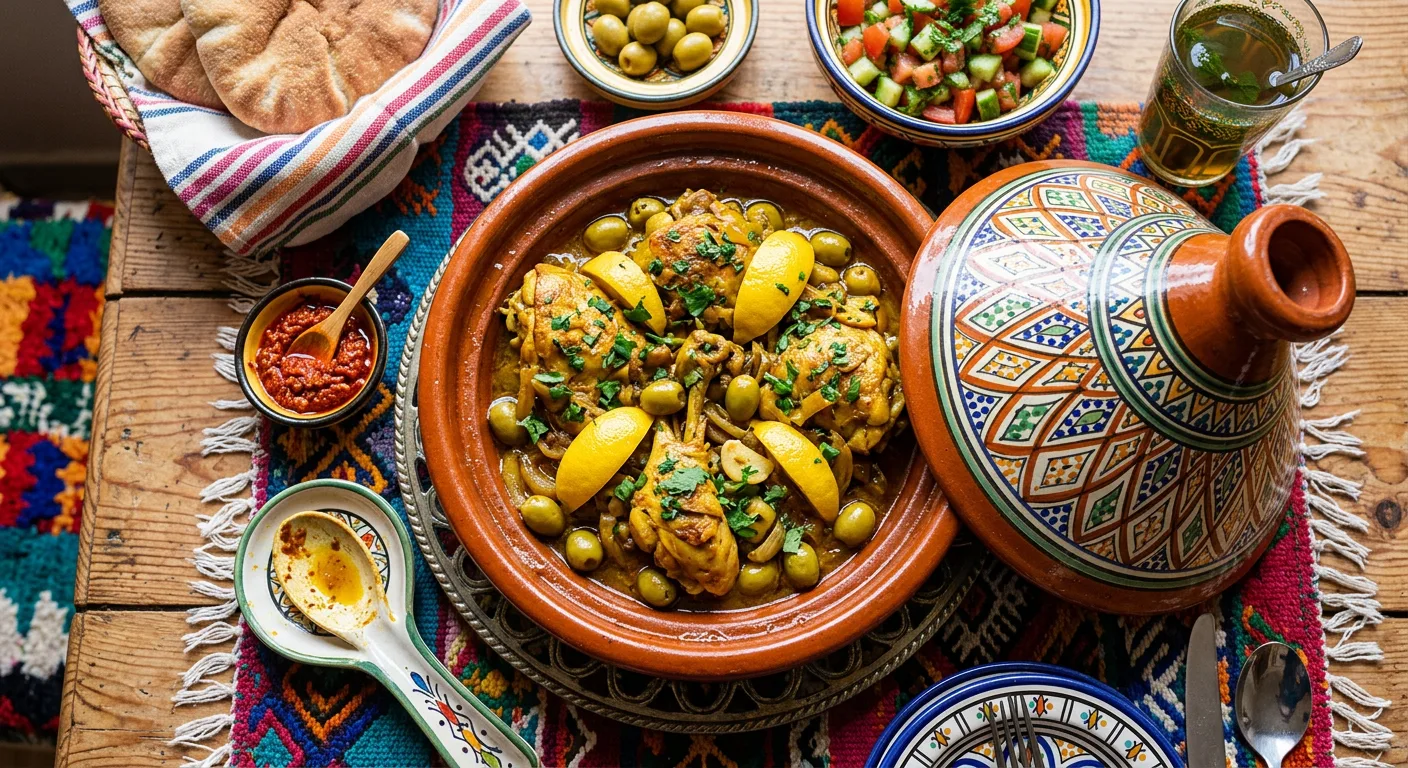
On a day trip, lunch is usually a tagine — and that is no bad thing. In the villages you pass through on the way to Ourika, Ouzoud or over the Tizi n'Tichka, the pots have been on low heat since morning and a good one is ready the moment you sit down, which is exactly what you want when a driver is waiting. But Moroccan cuisine is far wider than the clay pot, and a few of its best dishes are worth planning a city evening or a spare day around. Here is how to eat well without losing time.
The day-trip tagine, properly understood
The word tagine refers both to the pot and the dish cooked in it. The conical lid traps steam, returning it as condensation to the base — a slow-braising technique that turns cheaper cuts of meat extraordinarily tender, and one that suits roadside kitchens perfectly since the pots cook unattended for hours. The classic pairings are lamb with prunes and almonds (mrouzia), chicken with preserved lemon and olives, and kefta (spiced minced beef) with eggs. Each has a distinct spice profile; the lemon chicken is the mildest and the most widely loved.
The best day-trip tagines are often in village kitchens, not city restaurants. Ask your driver to stop at a roadside place where the pots have been on low heat since morning — the ones busy with local trade are the ones to trust — or arrange through us a cooking experience in a private home on a city day.
Pastilla — worth a city dinner
If the tagine is Morocco's everyday dish, pastilla is its haute cuisine — and a reason to book a proper dinner on an evening back in the city rather than grabbing it on the road. A paper-thin warqa pastry encases a filling of slowly braised pigeon (or chicken), egg, saffron and fresh coriander — then the whole parcel is dusted with icing sugar and cinnamon. Sweet and savoury together, in a flaky shell. It originated in Fes, though Marrakech riads make an excellent version for special dinners. If your day trip takes you to Essaouira, the seafood pastilla there is worth a coastal lunch.
Couscous — time your Friday around it
Couscous is the dish Moroccan families gather around on Friday after the midday prayer. It is not, in its home culture, a restaurant dish — it is domestic, maternal and communal. The semolina is steamed three times over a vegetable broth, then piled in a dome and dressed with slow-cooked vegetables (turnip, courgette, carrot, cabbage) and a choice of lamb, chicken or just vegetables. Restaurants in major cities serve it on Fridays and Saturdays — so if you are out on a Friday excursion that breaks for lunch, that is the day to order it rather than the default tagine.
Street food for a city evening
Djemaa el-Fna in Marrakech at dusk is the most theatrical food experience in Morocco and the perfect low-effort dinner on an evening back from a day trip — no booking, no travel, just walk over after you return. After 18:00 the square fills with smoke from charcoal grills and the shouted invitations of stall keepers. The snail broth stalls (numbers 14 and 32 have been there for decades) serve a cumin-spiked broth from which you extract the snails with a pin — odd, delicious and very cheap. Grilled merguez in a crusty baguette, msemen (flaky griddle bread) with argan honey, and fresh orange juice at 4 MAD a glass are the standards.
If your excursions reach further afield, the bites worth seeking out are bissara (thick dried fava bean soup with cumin and a slick of olive oil), eaten standing up for breakfast in the lanes of the spice merchants, and in Essaouira, sardines split and grilled over charcoal at the port — the defining bite of a coastal day trip.
Vegetarian and vegan eating on the road
Moroccan cuisine is generous to non-meat eaters, and the salad starters arrive fast — handy on a day trip where the lunch stop is short. Zaalouk (smoked aubergine and tomato), taktouka (roasted pepper and tomato), carrot with cumin, beetroot with chermoula — all plant-based and arrive automatically at a traditional restaurant, even the village ones. A plain vegetable tagine with olives and preserved lemon is available everywhere. The concept of veganism is not widely understood, so explain it plainly: ask specifically about smen (aged butter), used in couscous and some breads, and note the starters sometimes contain egg.
A cooking class for a non-excursion day
A half-day cooking class is the best way to spend a city day when you are not heading out on a trip. The format we prefer begins with a guided souk walk to source the ingredients — watching the spice merchant blend ras el hanout by hand is itself worth the morning — then a session in a private home or riad kitchen learning to make three dishes. You eat what you make by early afternoon, leaving the rest of the day free. We can build it into a day-trip programme or arrange it as a standalone half-day between excursions.
What to drink on the road
Morocco is a Muslim country; alcohol is available in licensed restaurants and hotels but not in the village kitchens you stop at on a day trip. The default drink everywhere is atay — mint tea poured from a height to create froth, three glasses in succession (the first is life, the second is love, the third is death, in the local saying) — and a glass at a roadside stop is part of the day. Fresh orange juice, almond milk and avocado smoothie are popular alternatives. Tap water is treated but variable; carry bottled water on long excursions where stops are few.
Frequently asked
Is Moroccan food spicy?
Moroccan cuisine is aromatic rather than hot. Ras el hanout, cumin, cinnamon, saffron and preserved lemon are the dominant flavours. Harissa (a chilli paste) is served as a condiment on the side in some regions but is never built into the main dish in the way Thai or Indian cooking might be. Travellers with low spice tolerance rarely have any issue, which makes it easy to eat well on a quick lunch stop between excursions.
What's the difference between a tagine and a couscous, and which suits a quick lunch?
Both are slow-cooked and aromatic, but tagine is a braise — meat and vegetables cooked low and slow in the conical clay pot until falling apart. Couscous is a steamed semolina grain served beneath a separately cooked stew. Tagine appears daily and is the practical day-trip lunch since it's cooked ahead and ready to serve. Couscous is traditionally the Friday family dish; in restaurants it's usually only on Friday and Saturday, so if you're out on a Friday excursion, order it then.
What should vegetarians and vegans order on a day out?
Moroccan food is naturally generous to vegetarians, and the salad starters arrive fast — useful when you have a driver waiting. Zaalouk (smoky aubergine and tomato), taktouka (roasted pepper salad), bissara (dried fava bean soup with cumin and olive oil) and a plain vegetable tagine are all excellent and widely available, including in the villages day-trippers pass through. Vegans should note that butter (smen) is often used in cooking; it's worth asking specifically.
What are the best street foods to try on a Marrakech city evening?
Djemaa el-Fna square at dusk is the best street food theatre in North Africa, and it's the easy win on an evening back in the city between day trips. Grilled merguez in a baguette, snail broth (babbouche) served in a cup, sheep's head (for the adventurous), fresh orange juice pressed to order, and msemen (flaky griddle bread with honey) are all worth trying. Arrive after 18:00 when the stalls are at full operation.
Can you fit a cooking class into a single day?
Yes — a cooking class is one of the best ways to spend a city day when you're not out on an excursion. A good half-day class takes you to a souk in the morning to source ingredients, then into a private home or riad kitchen to cook two or three dishes, and you eat what you make by early afternoon. It pairs neatly with a relaxed afternoon, or stands alone on a day you'd rather not travel. We can arrange it as a standalone half-day.
Is tap water safe to drink in Morocco?
Tap water is technically treated but its quality varies significantly by city and neighbourhood. We advise using bottled water for drinking and to clean teeth — carry a bottle on long day trips where stops are limited. Restaurants use tap water for cooking without issue. Avoid ice in roadside street stalls; ice in established restaurants is fine.
Eat well around your day trips
We'll thread the best food through your excursion days.
From the right village tagine stop on a day trip to an evening street-food walk or a half-day cooking class, Morocco Day Trips builds the food into your schedule — including dietary needs arranged in advance.
Enquire about a culinary itinerary